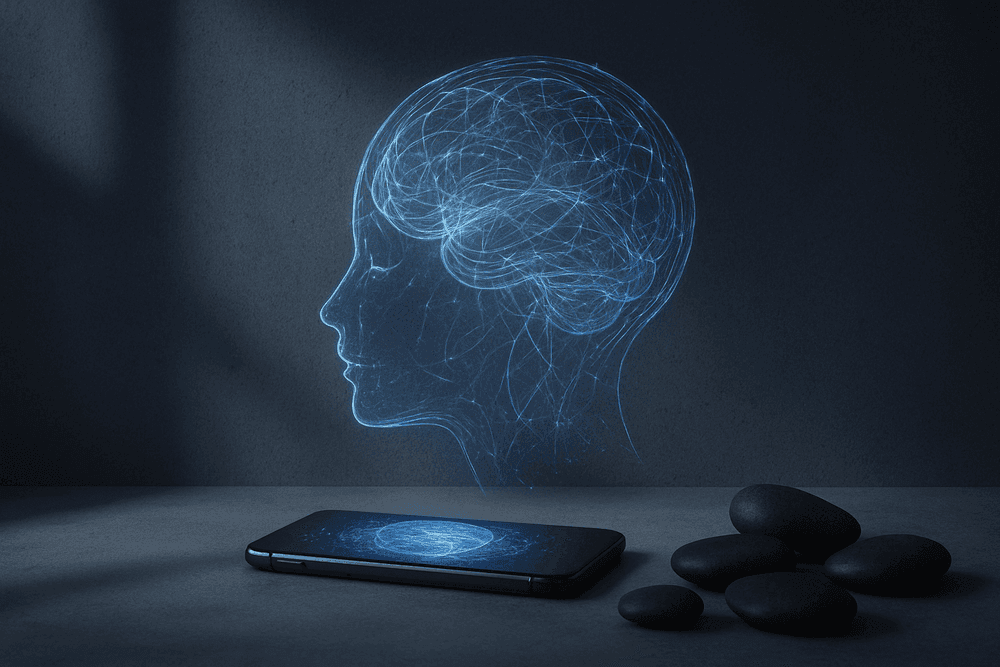
Can you remember your mother's phone number by heart? Your best friend's birthday without a calendar reminder? If the answer is "no," welcome to the reality of digital dementia. This isn't science fiction—it's a documented phenomenon already affecting millions worldwide, and it might be happening to you right now.
What You'll Learn From This Article:
- What digital dementia is and how it manifests in daily life
- The brain processes affected by constant device usage
- Science-backed methods to restore cognitive functions
- Practical brain training exercises you can start today
- How to build healthy digital habits without abandoning technology
Understanding Digital Dementia
The term "digital dementia" was coined by German neuroscientist Manfred Spitzer in 2012. It describes the deterioration of cognitive abilities caused by excessive use of digital technology. Unlike traditional dementia, which develops with age, digital dementia can affect people of any age—from teenagers to young adults.
"We are literally outsourcing our cognitive functions to machines. Our brain operates on a 'use it or lose it' principle, and when we stop actively using memory, attention, and problem-solving skills, these abilities begin to atrophy," explains Dr. Dimitri Christakis, pediatrician and researcher at Seattle Children's Hospital.
How Smartphones Reshape Brain Structure
A groundbreaking study published in Nature Neuroscience in 2023 revealed startling findings. Researchers from University College London examined the brains of 2,000 volunteers of various ages and discovered that heavy smartphone users (7+ hours daily) showed reduced gray matter in areas responsible for memory and attention.
Key Brain Changes Include:
- Reduced hippocampus activity — the area responsible for forming new memories
- Weakened prefrontal cortex — the planning and decision-making zone
- Impaired neuroplasticity — the brain's ability to form new neural connections
Signs of Digital Dementia: A Self-Assessment
Digital dementia doesn't develop overnight. It creeps up gradually, and many of its symptoms we dismiss as ordinary forgetfulness or fatigue.
Early Warning Signs:
- Inability to recall information without checking your phone
- Difficulty focusing on a single task for more than 10-15 minutes
- Reduced capacity for deep thinking and analysis
- Problems with spatial orientation without GPS
- Deteriorating short-term memory
- Constant need for digital stimulation
Case Study: Sarah's Journey
Sarah, a 29-year-old marketing manager from London, sought help for memory issues and inability to concentrate at work. "I can't read a book for longer than 20 minutes without reaching for my phone. I forgot my banking password that I'd known by heart for 5 years. In meetings, I can't formulate thoughts without Googling information first," she shared.
Analysis of her digital habits revealed: 9 hours daily on smartphone, checking notifications every 6 minutes, constant multitasking. After three months following a "digital detox" program and cognitive exercises, Sarah reported significant improvements: restored reading ability, enhanced working memory, and reduced anxiety levels.
The Neurobiological Mechanisms
To combat digital dementia effectively, we must understand its development mechanisms. Constant task-switching and instant access to information lead to fundamental changes in brain function.
"Our brain adapts to the environment we live in. If that environment demands quick, superficial reactions instead of deep thinking, the brain restructures accordingly. This isn't permanent—neuroplasticity works both ways," notes Dr. Susan Greenfield, neuroscientist at Oxford University.
What Happens at the Cellular Level:
- Decreased BDNF production — protein that stimulates neuron growth
- Neurotransmitter imbalance — particularly dopamine and serotonin
- Chronic stress from information overload
Practical Recovery Tools
The good news: the brain possesses remarkable recovery capabilities. Research shows that even after prolonged digital technology exposure, cognitive functions can be restored with the right approach.
Tool #1: The 20-20-20 Rule
Every 20 minutes of screen work, take a 20-second break looking at something 20 feet away. This not only reduces eye strain but gives your brain a chance to "reset."
Tool #2: Digital Minimalism
- Remove apps that don't provide real value
- Set specific time boundaries for social media use
- Create "phone-free zones" in your home (bedroom, dining table)
Tool #3: Brain Training Exercises
- Memory without recording: Memorize poems, phone numbers, routes
- Mental arithmetic: Calculate in your head instead of using calculators
- Physical book reading: Minimum 30 minutes daily without digital distractions
- Mindfulness meditation: 10-15 minutes of daily concentration practice
Tool #4: Single-Task Technique
Abandon multitasking. Scientific research shows that multitasking reduces productivity by 40% and increases errors. Focus on one task at a time.
Building Healthy Digital Habits
The goal isn't to completely abandon technology, but to use it consciously and purposefully.
Daily Application Strategies:
- Phone-free morning ritual: First hour after waking—no devices
- Digital sunset: Stop screen use 2 hours before bedtime
- Mindful information consumption: Choose quality content over endless scrolling
- Regular digital detoxes: One day weekly without social media
Recovery Timeline
Research from the University of California showed that cognitive function improvements are observable within 2-3 weeks of limited technology use. Complete recovery can take 3-6 months, depending on the degree of "digital dependency."
Conclusion
Digital dementia isn't an inevitable consequence of modern life, but rather a result of unconscious technology use. Understanding its development mechanisms and applying scientifically-backed recovery methods allows us not only to regain lost cognitive abilities but to use technology to our advantage.
Remember: your brain is plastic at any age. Small but consistent changes in digital habits can lead to dramatic improvements in quality of life and cognitive abilities.
References
- Wilmer, H. H., Sherman, L. E., & Chein, J. M. (2017). Smartphones and cognition: A review of research exploring the links between mobile technology habits and cognitive functioning. Frontiers in Psychology, 8, 605.
- Ward, A. F., Duke, K., Gneezy, A., & Bos, M. W. (2017). Brain drain: The mere presence of one's own smartphone reduces available cognitive capacity. Journal of the Association for Consumer Research, 2(2), 140-154.
- Kushlev, K., Proulx, J., & Dunn, E. W. (2016). Digitally connected, socially disconnected: The effects of relying on technology rather than other people. Computers in Human Behavior, 76, 68-74.